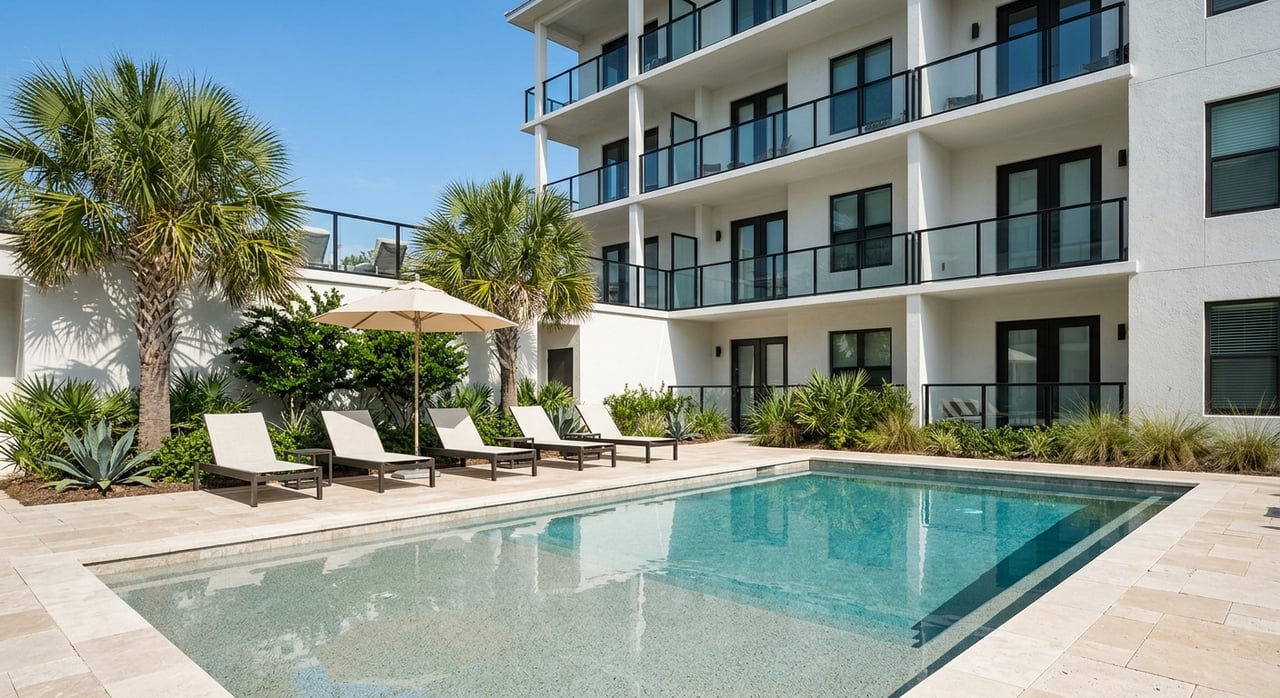
If you want a place at the beach that you can enjoy now and potentially rent out later, Fernandina Beach condos likely sit high on your list. That makes sense in a coastal market where easy upkeep, lock-and-leave convenience, and access to the water all matter. The key is knowing how to separate a condo that simply looks good online from one that truly fits your goals. Let’s dive in.
Why Fernandina Beach Condos Stand Out
Fernandina Beach sits in a tourism-driven part of Nassau County, and that shapes the condo market in a big way. Nassau County describes Amelia Island tourism as an important part of the local economy, with visitor spending supporting jobs across the county. For you as a buyer, that tourism backdrop helps explain why condos here often line up well with second-home and rental-property goals.
Many condos in Fernandina Beach are designed for part-time coastal living. Current local listings commonly show features like beach access, ocean views, pools, clubhouses, exercise rooms, elevators, assigned parking, garages, and storage for beach gear. You may also see gated entry, security features, and large balconies that make a property easier to enjoy during short stays.
That combination appeals to buyers who want a home that feels like a retreat without the full maintenance load of a detached house. If you plan to visit seasonally, a condo can offer a simpler setup and shared amenities that support a more relaxed ownership experience.
Second-Home Benefits To Consider
A condo can make sense as a second home if you value convenience. Shared exterior maintenance and common-area upkeep can reduce the amount of hands-on work you need to manage between visits. That matters if you live out of town and want a property you can lock up and leave with less stress.
Amenities can also shape your day-to-day experience. In Fernandina Beach, buyers often look for walkable beach access, pools, fitness spaces, elevators, and parking that make arrival and departure easier. Those features are not guaranteed in every building, but they are common enough to be part of your search strategy.
Views and outdoor living space also carry real weight in this market. Balconies and water views show up frequently in local listings, and they can have a big impact on how often you use the property and how much you enjoy it. If your goal is a true getaway, lifestyle fit matters just as much as the purchase price.
Investment Potential Starts With The Building
If you are looking at a Fernandina Beach condo as an investment, tourism is still a major demand driver. Nassau County says tourism has been increasingly important to the county for decades, which helps support the broader rental backdrop. At the same time, rental demand in a beach market can be seasonal and event-driven rather than perfectly steady year-round.
Local rent data also shows an active market context. Zillow estimated the average Fernandina Beach rent at $2,383 in April 2026, up 11% year over year, and showed 155 condo listings in the city. Those numbers can help you understand the market, but they do not predict performance for any specific condo.
The biggest mistake buyers make is assuming all condos in a beach town are rental-friendly. They are not. Some local listings are marketed as short-term-rental approved or as allowing daily bookings, but that is specific to each building and its governing documents.
Rental Rules Matter More Than Location
Before you count on rental income, you need to verify the building’s rules. In Florida, associations may have the power to approve or disapprove proposed leases if that authority is included in the declaration or bylaws. That means rental rules are not just a casual policy choice. They can directly affect whether your ownership plan works.
Ask about:
- Minimum lease terms
- Short-term rental permissions
- Approval requirements for tenants
- Rental caps or limits
- Guest rules
- Any restrictions written into the declaration or rules
Do not rely on marketing remarks or assumptions based on nearby properties. The real answer is in the condo documents. Florida resale law also requires buyers to receive governing documents and related disclosures before signing, which gives you a chance to review the details before you commit.
Understand Monthly Fees Before You Buy
Condo dues can cover much more than lawn service and a pool. Under Florida law, association financial reporting can include expenses such as security, management fees, taxes, recreation facilities, refuse collection, utilities, lawn care, building maintenance and repair, insurance costs, administration, salaries, and reserves. In other words, your monthly fee may reflect the full cost of operating the building.
That makes it important to look past the listing price. A lower-priced condo with high dues, weak reserves, or pending assessments may not be the better deal. A higher monthly fee is not automatically bad, but you need to understand what you are paying for.
When reviewing fees, ask specifically:
- What the monthly fee covers
- When the fee last increased
- Whether reserves are fully funded
- Whether insurance costs have changed recently
- Whether there are current or planned special assessments
This is where a practical, numbers-first review can save you from surprises later.
Insurance Is A Big Coastal Condo Cost
Insurance deserves extra attention in Fernandina Beach. Florida consumer guidance says condo unit owners generally need an HO-6 policy, which mainly covers personal property and liability. That same guidance says condo unit-owner policies must include at least $2,000 of loss-assessment coverage, subject to a deductible cap for that coverage.
Just as important, the association’s master policy does not cover everything inside your unit. Florida guidance says many interior items are generally the unit owner’s responsibility, including personal property, floor and wall coverings, electrical fixtures, appliances, built-in cabinets and countertops, and window treatments. If you are comparing condos, this should be part of your ownership-cost math.
You should also evaluate flood coverage separately. Florida consumer guidance says flood damage is not covered by standard homeowners insurance. In a coastal market, that is not a detail to overlook.
Maintenance Responsibilities Are Split
One reason buyers like condos is shared maintenance, but shared does not mean unlimited. Florida law places maintenance of the common elements on the association, except for limited common elements assigned to the owner by the declaration. The exact split can vary by building, which is why document review matters.
The same goes for repairs after damage. Florida law says property the association must insure and that is damaged by an insurable event is repaired or reconstructed by the association as a common expense. Non-insurable items and owner-caused damage can fall back on the unit owner.
For you, that means two condos with similar layouts may come with very different practical responsibilities. You want clarity on what the association handles, what you handle, and how claims and deductibles are addressed.
Older Buildings Need Extra Review
If you are considering a building that is three habitable stories or higher, age matters. Florida requires milestone inspections for certain buildings at 30 years of age and every 10 years after that, with some local coastal jurisdictions able to require earlier timing. Florida also requires structural integrity reserve studies for certain condominium buildings that are three stories or higher.
Those studies address major components like the roof, structure, fire protection systems, plumbing, electrical systems, waterproofing and exterior painting, windows, and exterior doors. The results can affect reserve funding, repair schedules, special assessments, and monthly dues. That does not mean older buildings are off the table, but it does mean you should review the building’s compliance status carefully.
Ask whether the required inspections and reserve studies have been completed, whether repairs are pending, and who is expected to pay for them. In many condo purchases, this is one of the most important financial conversations you can have.
A Smart Fernandina Beach Condo Checklist
Before you buy a second home or investment condo in Fernandina Beach, make sure you review:
- The declaration, bylaws, and rules
- The current budget and latest financial statements
- Reserve funding details
- Any FAQ document provided by the association
- Milestone inspection status, if applicable
- Structural integrity reserve study status, if applicable
- Current or planned special assessments
- Association insurance coverage and exclusions
- Your likely HO-6 and flood insurance needs
- Rental restrictions and lease approval requirements
This step may feel tedious, but it is where smart condo buying happens. A beautiful unit can still be the wrong fit if the rules, fees, or future costs do not align with your goals.
How A Practical Local Review Helps
When you are buying a condo as a second home or investment, you are not just buying a floor plan or a view. You are buying into a building, a budget, a set of rules, and a long-term cost structure. In a market like Fernandina Beach, that bigger-picture review matters every bit as much as the unit itself.
That is especially true if you want a property that works well both personally and financially. Looking at condition, building upkeep, roof and exterior factors, reserve planning, insurance exposure, and rental restrictions together can help you make a more confident decision. That kind of practical review is often what separates a smooth ownership experience from a frustrating one.
If you are weighing Fernandina Beach condos as a second home or investment, HERBERT E. MCKINNEY, P.A. can help you compare options with a local, clear-eyed approach and guide you through the details that matter before you buy.
FAQs
What makes Fernandina Beach condos appealing as second homes?
- Fernandina Beach condos often appeal to second-home buyers because many offer lock-and-leave convenience, shared maintenance, beach access, water views, and amenities like pools, fitness rooms, elevators, and parking.
Can you use a Fernandina Beach condo as a short-term rental investment?
- Some Fernandina Beach condos may allow short-term rentals, but you should never assume that based on location alone because rental permissions, lease terms, and approval rules are controlled by each building’s governing documents.
What do Fernandina Beach condo fees usually cover?
- Condo fees may cover a wide range of building and association costs, including maintenance, insurance, management, security, utilities, recreation areas, refuse collection, administration, and reserves, depending on the association.
What insurance do you need for a Fernandina Beach condo?
- Florida consumer guidance says condo unit owners generally need an HO-6 policy for personal property and liability, and you should also review loss-assessment coverage, master-policy exclusions, and whether separate flood coverage is appropriate.
What should you ask before buying a Fernandina Beach investment condo?
- You should ask about rental rules, special assessments, reserve funding, insurance coverage, current budget details, inspection and reserve-study status, and whether there are pending repairs or fee increases that could affect your costs.
