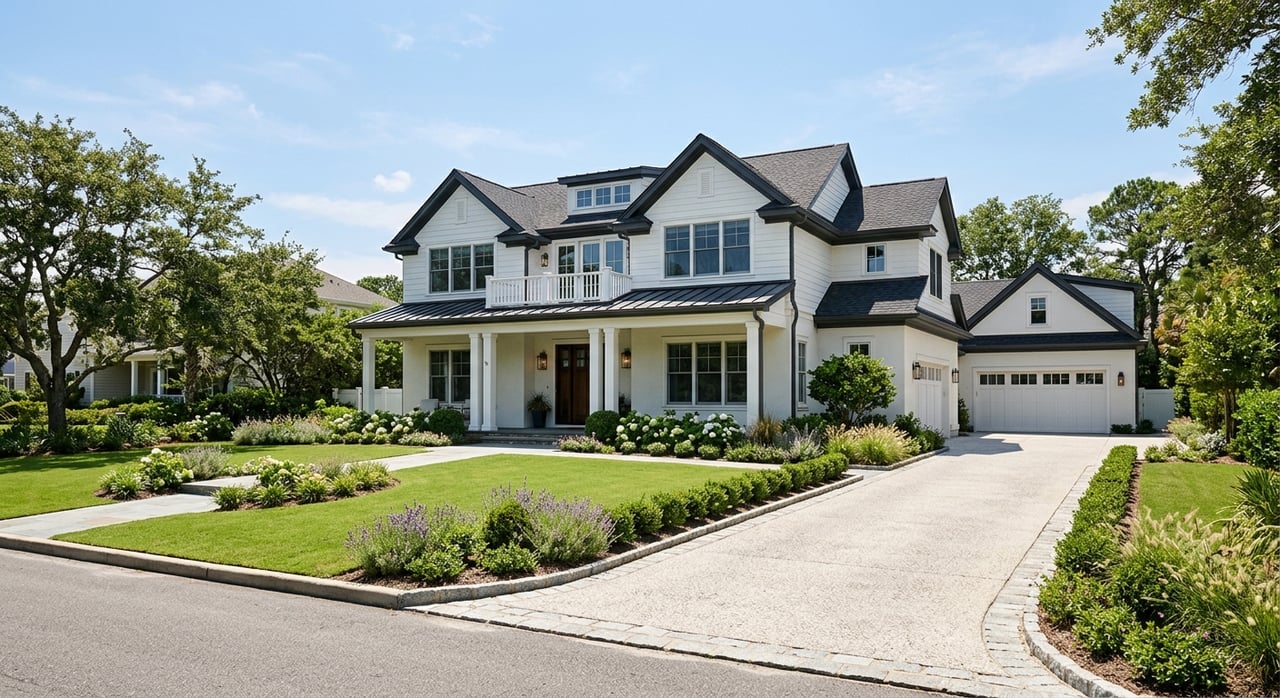
Thinking about trading Jacksonville traffic and sprawl for a coastal home base with a smaller-town feel? If you are considering a move to Fernandina Beach, you are likely weighing more than distance. You are comparing lifestyle, housing options, commute patterns, and the real cost of owning near the water. This guide will help you understand what changes, what to plan for, and how to make the move with fewer surprises. Let’s dive in.
Why Fernandina Beach Feels Different
Fernandina Beach is a compact city on Amelia Island with 13,672 residents across 11.83 square miles. That smaller footprint can make day-to-day living feel more manageable than Jacksonville, especially if you want easier access to the beach, downtown, or local parks.
The housing profile also points to a more ownership-focused market. About 80.5% of homes are owner-occupied, which gives many buyers the sense that Fernandina Beach is less about constant turnover and more about long-term living.
If you are moving from Jacksonville, the biggest shift may not be mileage. It is the pace and layout of daily life. Nassau County describes the SR 200/A1A corridor as low-density, auto-oriented, and suburban, so your routines may become more centered around drive routes, island access, and how close you want to be to key destinations.
Commute From Fernandina Beach to Jacksonville
For most people, this move is still a car-first decision. The main regional road connection is I-95 Exit 373 to SR 200/SR A1A, which Nassau County identifies as the primary gateway to Amelia Island and a principal connection between I-95 and the Port of Fernandina.
That matters if you plan to keep working in Jacksonville, visit family often, or need regular access to services off-island. The mean travel time to work in Fernandina Beach is 22.3 minutes, but your personal commute can vary quite a bit depending on where you live on the island and where you need to go.
Transit exists, but it is usually a backup rather than a full replacement for driving. JTA’s Nassau Express Select runs on weekdays between Yulee and downtown Jacksonville, and Nassau County’s Island Hopper loops around Amelia Island Thursday through Monday. In practice, that makes transit more useful for regional support or park-and-ride planning than for a simple front-door-to-office commute.
Nassau County also notes that many major healthcare facilities are in Jacksonville. Even if you do not commute daily for work, dependable north-south travel can still be a big part of your relocation decision.
Housing Options in Fernandina Beach
Fernandina Beach is still mostly a single-family home market, but it is not one-size-fits-all. Based on the city’s housing snapshot, 70.3% of units were single-family detached, while townhomes made up 7.3%, duplexes 4.0%, triplex and quad units 5.2%, and larger multifamily buildings 5.4%.
That variety gives you room to match the move to your goals. You may want a detached home with more privacy, an attached home with a simpler footprint, or a property closer to downtown or the beach that trades lot size for convenience.
Historic areas and older homes
Fernandina Beach has two National Register-listed historic districts: Downtown and Old Town. Old Town reflects the original 1811 Spanish-platted town, while Downtown shows later 19th and early 20th century development.
If you love historic character, this can be a major draw. It also comes with extra planning. Properties in the historic district must obtain a Certificate of Appropriateness before a building permit is issued for work on the structure, whether the building itself is historic or not.
Lot sizes and development rules
One of the easiest mistakes buyers make is assuming a lot works the way it looks. The city’s GIS tools let you check setbacks, density, minimum lot width, lot coverage, and building heights by parcel, which can be very important if you are thinking about parking, additions, a pool, or future changes.
Minimum lot width varies by zoning district. For example, the code lists 100 feet in RE, 75 feet in R1-G, 50 or 75 feet in R-1, 50 feet in RLM, R-2, R-3, and MU-1, 46.5 feet in OT-1 and OT-2, and 25 feet in MU-8.
The practical takeaway is simple. Fernandina Beach includes very different residential products, from historic in-town lots to beach-corridor homes to larger-lot or estate-style parcels. If you are relocating from Jacksonville, it helps to decide early whether you value character, land, parking, privacy, or proximity most.
What It Costs to Own Near the Coast
A move to Fernandina Beach can be a lifestyle upgrade, but it can also be a cost shift. Census data shows a median owner-occupied home value of $555,400, with median monthly owner costs of $2,218 with a mortgage and $846 without a mortgage. Median gross rent is $1,259.
Those numbers offer a baseline, not a full budget. In a coastal market, you also need to think about flood exposure, insurance structure, and how renovation plans could affect your costs.
Flood insurance and floodplain review
Nassau County says flood hazard areas are mapped on FEMA flood insurance rate maps, and special flood hazard areas carry a 1% annual chance flood standard. The county also makes clear that flood damage is not covered by standard property insurance.
There is some helpful news here. Nassau County participates in the National Flood Insurance Program and the Community Rating System, and its current CRS Class 7 participation provides a 15% flood insurance discount. The county notes that residents in unincorporated Nassau County and the City of Fernandina Beach benefit from flood insurance discounts.
The city adds another layer for buyers who plan to improve a home after closing. Almost all permitted development requires floodplain review, and if a structure in a Special Flood Hazard Area is substantially damaged or substantially improved, the city may require elevation to the base flood elevation.
Hurricane deductible planning
Another budget item that can catch buyers off guard is the hurricane deductible. Florida’s Department of Financial Services explains that hurricane deductibles apply on an annual basis. It also advises policyholders to file claims even when early damage appears to fall below the deductible, because later storms can use deductible credit.
For a buyer moving from Jacksonville, the lesson is not to assume your current insurance mindset will transfer over cleanly. Before you buy, it helps to understand how the deductible works and how it fits into your emergency savings and monthly housing budget.
How to Plan Your Home Search
Because Fernandina Beach is only 11.83 square miles, home tours can be very efficient if you plan them by subarea. Instead of zig-zagging around town, it makes more sense to group homes by location and lifestyle.
A practical first-trip sequence is downtown and Old Town, then the beach-side Fletcher corridor, then west-side or larger-lot areas if you want more land. That approach helps you compare the feel of each area without wasting time in traffic or losing context between showings.
What to do before your first trip
Before you tour homes, it helps to line up the basics:
- Get pre-approved
- Request insurance quotes early
- Review likely commute routes
- Check parcel details through the city GIS resources
- Flag any homes in historic districts or flood-prone areas
Doing this early can save you from getting attached to a property that does not fit your budget or your plans for the home.
A smart relocation timeline
If you are moving from Jacksonville and want a smoother purchase, this timeline works well:
- Get pre-approved and gather insurance estimates before your first visit.
- Use one scouting trip to narrow down location and housing style.
- Schedule a second visit with an inspector or contractor if the home is older, historic, or in a flood-prone area.
- Complete a final due-diligence review before closing.
This sequence is especially useful in Fernandina Beach, where historic-district work may need a Certificate of Appropriateness and floodplain projects may trigger added review.
Try the Lifestyle Before You Commit
One of the best ways to know whether Fernandina Beach fits your daily life is to test it like a local. Spend time at the places you would actually use, not just the homes you want to see.
The city lists Main Beach Park, North Beach Park, and Seaside Park as beach-access parks. Downtown, the marina sits on the Intracoastal Waterway, and Nassau County says Amelia Island has about 40 miles of bike trails. Those details can help you picture weekends, exercise, errands, and how much you want to drive versus stay close to home.
If you are flying in for tours, Fernandina Beach Municipal Airport is about three miles south of historic downtown and less than two miles from the beaches. The airport is open 24/7 and offers convenient access to Jacksonville, which can make short planning trips easier.
Is Fernandina Beach the Right Move?
Fernandina Beach can be a strong fit if you want coastal access, historic character, and a range of home styles in a smaller setting than Jacksonville. It offers a different rhythm of life, with beach access, downtown amenities, and neighborhood variety all packed into a compact city.
At the same time, the tradeoffs are real. Transit flexibility is more limited, flood exposure needs careful review, and some homes come with renovation restrictions or added approval steps.
That is why relocation here works best when you look past the photos and focus on the full picture. Commute, lot rules, insurance, and condition all matter just as much as curb appeal. If you want practical guidance on making that move with more confidence, HERBERT E. MCKINNEY, P.A. can help you sort through the details and plan your next step.
FAQs
What is the commute like from Fernandina Beach to Jacksonville?
- Most commuters rely on driving via I-95 Exit 373 and SR 200/SR A1A, while transit is typically more useful as a backup option or for Yulee-based park-and-ride trips.
What kinds of homes are common in Fernandina Beach?
- The market is primarily single-family detached homes, but you can also find townhomes, duplexes, smaller multifamily properties, and homes in historic districts.
What should Jacksonville buyers budget for in Fernandina Beach?
- In addition to your mortgage and taxes, plan for flood insurance considerations, hurricane deductible costs, and possible renovation-related expenses tied to floodplain or historic-district rules.
What should buyers know about historic homes in Fernandina Beach?
- Homes in the city’s historic districts may require a Certificate of Appropriateness before certain work can move forward, so renovation plans should be reviewed early.
How can you make Fernandina Beach home tours more efficient?
- Group showings by subarea, start with a scouting trip, and check parcel details, floodplain status, and historic-district status before your second visit or final decision.
