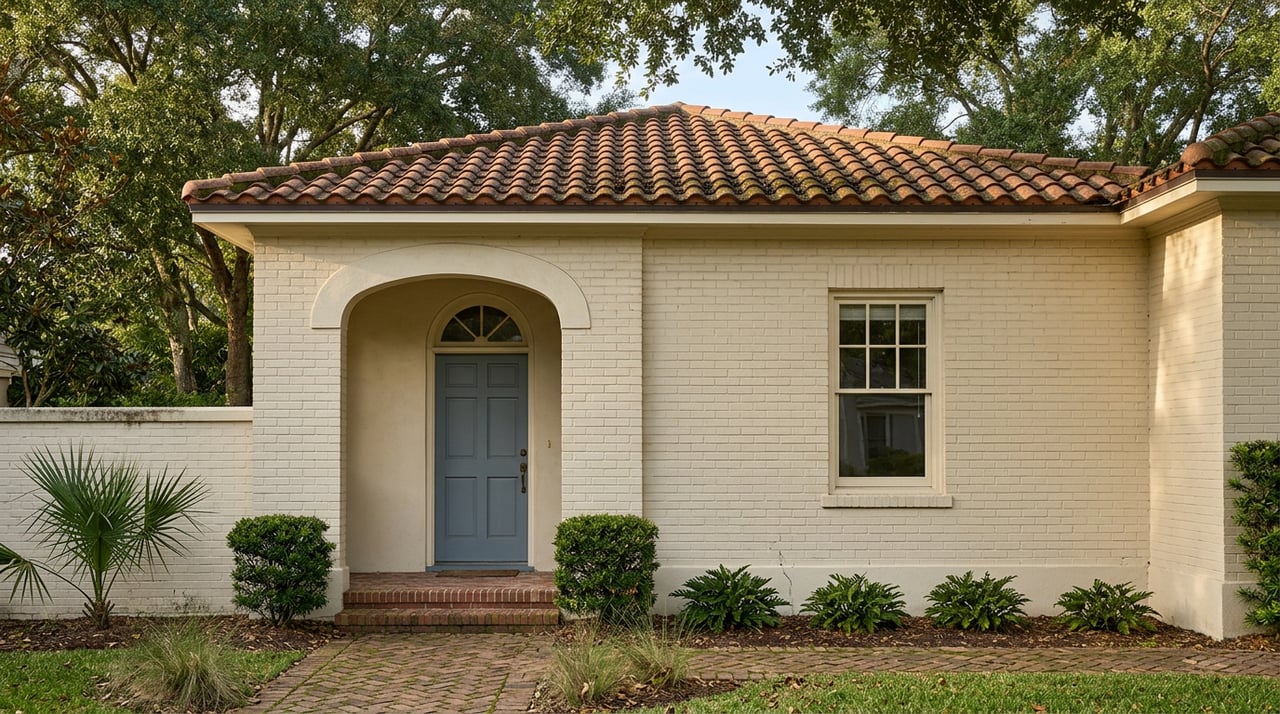
Buy a 1930s Mediterranean Revival bungalow on a shaded San Marco street, and the assumption forms almost automatically: somewhere at City Hall, a file exists with your address in it, and if you want to swap the windows or repaint the trim, someone in a review meeting has to sign off first.
That assumption is wrong, and the gap between what people expect and what the ordinance actually says is worth understanding before you write an offer, not after your contractor pulls a permit.
What "Historic District" Actually Means at City Hall
Jacksonville does regulate exterior changes to historic property, but only in places the city has formally designated. Once a neighborhood carries that designation, any exterior work, including window repairs, siding, fences, driveways, and sheds, requires an approved Certificate of Appropriateness before a permit can be issued. The Jacksonville Historic Preservation FAQ says the Jacksonville Historic Preservation Commission meets on the fourth Wednesday of most months and asks for applications roughly six weeks ahead of the meeting date. Once approved, a Certificate of Appropriateness is good for one year before work starts and five years once it has.
That entire process, the paperwork, the waiting period, the design review, applies to properties inside a locally designated historic district. Jacksonville's list of locally designated historic districts does not include San Marco.
San Marco carries no local historic district designation.
The Districts That Do Carry the Designation
According to the city's own historic district guidance, Jacksonville's locally designated historic districts are Springfield, Riverside Avondale, and the St. Johns Quarter. Riverside and Avondale function as one combined local district for review purposes even though, according to the city's Property Appraiser, they show up as two separate listings on the National Register. Parts of Ortega carry a National Register listing without a local designation, which means the honor exists on paper but doesn't trigger the same city review process that Riverside and Springfield owners deal with.
| Neighborhood | Locally designated (COA required) | National Register listed |
|---|---|---|
| Riverside-Avondale | Yes | Yes, as two separate listings |
| Springfield | Yes | Not addressed in the city sources reviewed |
| St. Johns Quarter | Yes | Not addressed in the city sources reviewed |
| Ortega (portions) | No | Yes, in part |
| San Marco | No | Not addressed in the city sources reviewed |
The National Register designation itself is largely honorary. It doesn't regulate what an owner can do to their property, aside from triggering a demolition review. The local designation is the one with teeth, and it's the one San Marco doesn't have.
Where the Historic Feel Actually Comes From
None of this means San Marco lacks a preservation ethic. The San Marco Preservation Society formed in 1975, the same era Riverside Avondale Preservation and Springfield Preservation and Revitalization organized in their own neighborhoods, and it has spent five decades on zoning advocacy, beautification projects, and coordinating renovation standards block by block. The difference is that RAP and SPAR operate alongside a city-enforced district, while the San Marco Preservation Society operates instead of one. What keeps a 1928 Spanish-tile roof looking period-correct in San Marco is neighborhood culture and informal peer pressure, not an ordinance.
That distinction matters for a buyer weighing renovation plans. A homeowner in Riverside who wants to replace a front door needs city sign-off.
Jacksonville's Historic Preservation Property Tax Exemption
Jacksonville offers a Historic Preservation Property Tax Exemption to owners who complete an approved rehabilitation project on a locally designated landmark or a property inside a locally designated historic district. The exemption covers 100 percent of the added value from that rehabilitation for a ten-year period, though it applies only to the city's portion of the tax bill. Other taxing authorities still assess the full post-renovation value. To use it, an owner has to get Part I of the application approved by the Planning and Development Department before pulling permits, and the work has to follow the Secretary of the Interior's Standards for Rehabilitation.
Picture two owners doing an identical gut renovation that adds $150,000 in assessed value. The Riverside owner, working inside a designated district, can apply for that ten-year exemption on the city's millage and materially soften the tax impact of the improvement.
What the 1920s-1960s Bones Mean for Your Inspection List
San Marco's housing stock runs primarily from the 1920s through the 1960s, and that vintage carries predictable characteristics regardless of what the city calls the neighborhood on paper. A general contractor working in the neighborhood since 2017 points to plaster walls over wood lath, original hardwood floors, and mechanical systems that have often been partially, not fully, updated over the decades. Older homes in the neighborhood frequently still have some combination of knob-and-tube or aluminum branch wiring, galvanized plumbing, and HVAC systems sized for a smaller home than what's actually there now.
A buyer's inspection period is a chance to investigate aging infrastructure behind the walls; the absence of a design review board doesn't mean those issues aren't there.
Before you write an offer on an older San Marco home, it's worth confirming a few things directly:
- Whether the specific parcel carries any individual city landmark designation
- Sewer versus septic status, since not every property in the neighborhood's older pockets is on city sewer, and that affects both financing and renovation sequencing
- Flood insurance requirements for the specific block, since coverage needs vary within the neighborhood rather than applying uniformly
- Wiring and plumbing vintage, confirmed by a licensed inspector rather than assumed from the home's age alone
The River Road Question
Some marketing materials and neighborhood write-ups refer to a "River Road Historic District" along San Marco's riverfront, describing early 20th-century homes and mature tree canopy in that stretch. It's a meaningful architectural pocket within the neighborhood.
Quick Answers
Is San Marco a locally designated historic district? San Marco is not a locally designated historic district.
Do I need city approval to renovate a historic-style home in San Marco? Check the property's designation status through the city's Land Development Map before you plan a project.
Can I get Jacksonville's historic tax exemption on a San Marco renovation? The exemption applies to locally designated landmarks and properties inside designated historic districts.
If you're weighing San Marco against Riverside, Avondale, or Springfield and trying to figure out what a specific renovation would actually cost after tax treatment, that's exactly the kind of parcel-by-parcel question worth working through before you write an offer. Ernie McKinney has spent nearly two decades on the ownership and contractor side of Northeast Florida real estate and can walk through what a given property's history, systems, and designation status mean for your specific plans. Schedule a call to talk through your next move.
This article is general information, not legal, tax or financial advice. Consult a qualified professional about your situation.
